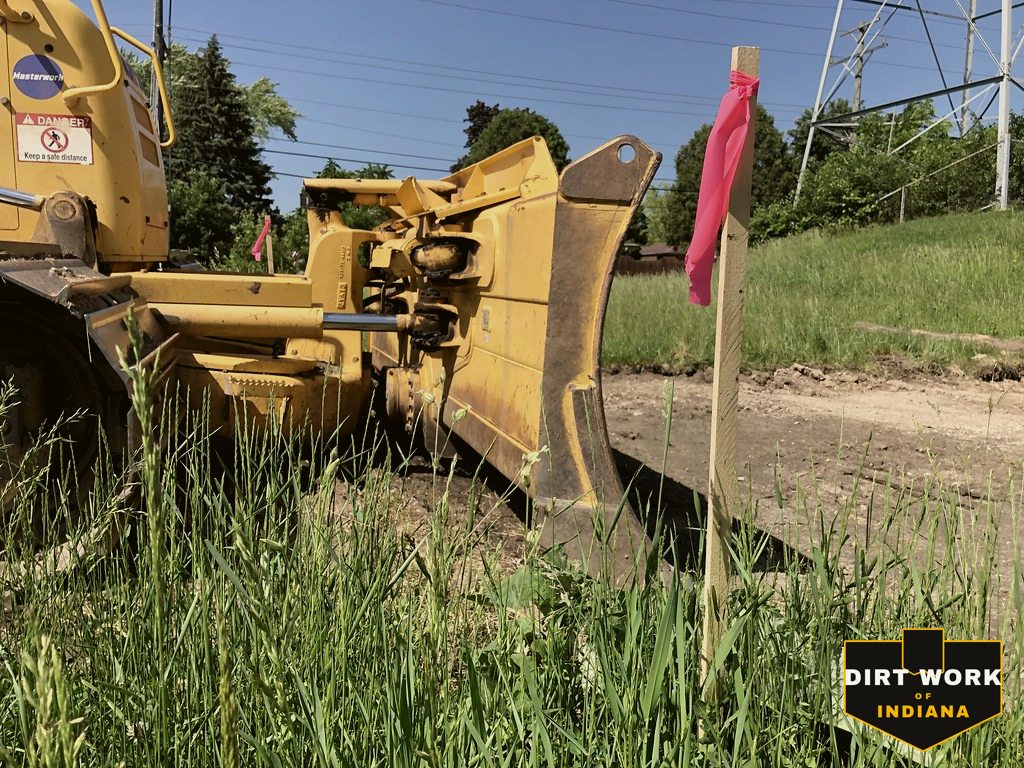
Rough grading and site shaping
Cutting the high ground, filling the low ground, and establishing the fall a property needs before anything gets built on it. Rough grade is where a site is won or lost: it sets the drainage pattern every later decision has to live with, it decides whether the building pad sits above water or in it, and it determines how much finish work the job will need later. We strip and stockpile topsoil first, shape the subgrade in mineral soil, and put the topsoil back at the end rather than burying good dirt under the site.
Finish grading, the part most people are actually buying
There is a real gap between ground that is technically level and a yard a person can mow at full speed. Finish grading closes it: breaking up the crust, floating out the machine tracks, feathering new work into the existing lawn so there is no seam, pulling the grade away from foundations and walks at a consistent fall, and leaving a seedbed that will not turn into ruts and humps the first time it rains. This is slow work with small passes and it is what separates a yard that looks finished from one that looks worked on.
Regrading a yard that was never right to begin with
Half the residential grading in Indiana is repair work on somebody else's hurry. A builder rough-graded the lot, seeded it, and left, and twenty years of settling, landscaping, patios, and additions have quietly reversed the fall toward the house. The symptoms are always the same: water standing along the foundation, a soggy stripe that never dries, a low corner that grows nothing, mulch beds that wash into the driveway. Most of it is one to three days of machine work, and most of it is permanent once it is done right.
Grading versus drainage, and how to tell which one you need
These get confused constantly and buying the wrong one is expensive. If water stands somewhere and there is a lower place it could reasonably go, that is a grading problem and reshaping the ground solves it. If water stands and there is nowhere lower to send it, or the water is coming up rather than running across, that is a drainage problem and it needs pipe, a French drain, or a tile outlet. Many Indiana properties have both, in which case the order matters: shape first, then drain what shaping cannot reach. We will tell you which one you are looking at before quoting either.
Grade control, and why we do not eyeball it
Flat Indiana ground gives you almost nothing to work with. A yard can look dead level and still hold a two inch dish in the middle that keeps a hundred square feet wet for three days after every storm. We work to shot grades with laser and GPS control on the machines where the job calls for it, which is the only way to hold a consistent fall over a long run and the only honest way to promise water will actually move. Slope by feel works on a hillside. It does not work in Frankfort.
Builder-grade lots, new construction and pool digs
New construction leaves specific problems: compacted subsoil where the equipment sat, topsoil spread too thin to grow anything, downspouts discharging at the foundation, and a rough grade set to shed water off the build site rather than off the finished yard. Pool and patio projects create the same situation in miniature, because a large flat impervious object gets dropped into the middle of a drainage pattern that used to work. We regrade around new work so the finished property drains as a whole rather than as a collection of separate good ideas.
Farm and acreage grading
Lane crowns that shed instead of holding, feedlot and equipment pads that drain away from the building, grassed waterways shaped to carry the flow the field actually produces, filling old ditches and building new ones, and leveling the perpetual small stuff a working property generates. Farm grading rewards someone who understands water as much as someone who can run a blade, because a waterway shaped a foot too narrow is a gully next spring.
Erosion repair and slope work
On the rolling counties the failure mode flips: water leaves too fast and takes the property with it. Rebuilding washed lane edges, reshaping gullies before they become ravines, laying in armor stone where the flow concentrates, and cutting slopes back to an angle that holds seed and can be mowed. Fixing erosion means fixing where the water is being concentrated upstream, not just filling the hole, which is why the same washout keeps coming back for people who only fill the hole.